Cardboard vs. Sisal vs. Wood: Which Cat Scratcher Is Right for Your Cat?
Picking the best cat scratcher material can feel like guesswork, especially when your cat ignores the brand-new post and keeps going for the sofa. The good news: most cats have clear preferences, and once you know what to look for, the choice gets much easier. Here's how cardboard, sisal and wood compare.
Why the Material Matters
Scratching is natural cat behavior. Cats scratch to stretch, mark territory and work on their claws. (If your cat is hitting the couch, our guide on why cats scratch furniture and how to stop it gently explains the why.) A scratcher only works if the surface feels good under their paws. Some cats like to dig their claws in and pull; others prefer a quick raking motion. The material shapes that experience.
Cardboard Scratchers
Corrugated cardboard is one of the most popular scratcher materials, and many cats take to it right away. The layered ridges give claws something satisfying to grip, and the texture is easy to rake.
Pros
- Usually the most budget-friendly option
- Lightweight and easy to move from room to room
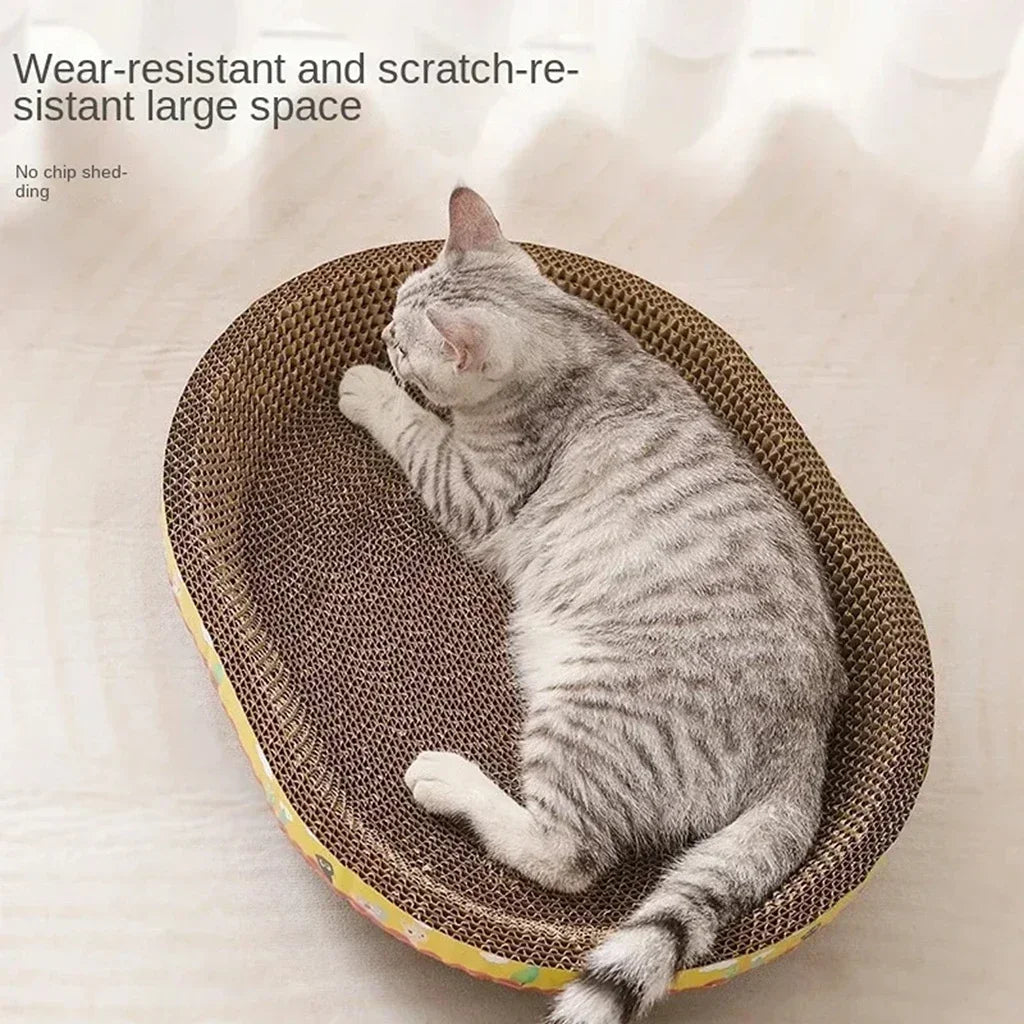
- Often shaped as a flat lounger, which suits cats who like to stretch out
Cons
- Wears down faster than harder materials, depending on how much your cat scratches
- Shreds leave a little mess to vacuum up
- Should be kept dry
A good example is our Oval Cardboard Cat Scratcher Bed. It's made of corrugated cardboard, comes with catnip, and doubles as a cozy spot for stretching and napping. At $11.99, it's an easy way to find out whether your cat is a cardboard fan. Prefer something that changes shape? The Foldable Accordion Cat Scratcher with Bell is also corrugated cardboard, and it can be refolded into new shapes and levels.
Sisal Scratchers
Sisal is a tough natural fiber, usually wrapped around a post or woven into a mat. Its rough, fibrous feel lets cats dig in and pull, which many cats find very satisfying. Sisal is a common choice for tall posts because it holds up to a vigorous full-body stretch.
- Good for: cats who like to pull and stretch upward
- Watch for: loose, frayed fibers over time; a wobbly base will put cats off
We don't currently carry a sisal post, but if you want one, look for a heavy, stable base so it doesn't tip when your cat leans into it.
Wood Scratchers
Wood has a firm, natural feel and a sturdy frame, which is a plus for big or energetic cats. Wooden scratchers also tend to look at home in a living room, so they're easier to live with if style matters to you.
Our Wooden Cat Scratcher with Ball is built from solid pine with a natural paper scratch surface, and a hidden ball inside the frame turns scratching into a game. It comes in two sizes: S for kittens and small spaces, and L for bigger cats. It's $42.99, a bit more than cardboard, but its heavy frame won't tip over.
Quick Comparison
- Cardboard: lightweight, affordable, great for lounging and raking
- Sisal: rough and fibrous, great for digging in and stretching tall
- Wood: sturdy and stylish, great for stability and a longer-term piece
How to Find Your Cat's Favorite
Step 1: Watch what they already scratch
Does your cat go for the rug (horizontal, textured), the sofa arm (soft, fabric) or the door frame (vertical, firm)? Their habits point to the surface and angle they like.
Step 2: Start with one affordable option
A cardboard scratcher is a low-risk test. If your cat uses it daily, you've learned something useful about their style.
Step 3: Put it where they already scratch
Place the new scratcher right next to the spot you want them to leave alone. Sprinkling a little catnip on top can help draw their interest.
Step 4: Mix materials if you can
Many households end up with more than one type. A cardboard lounger in one room and a sturdy wooden scratcher in another gives your cat choices, and cats like choices.
FAQ
What is the best cat scratcher material?
There isn't one answer for every cat. Cardboard is a great starting point for most; sisal and wood suit cats who want something firmer or taller. Watch your cat and let their preferences decide.
Is cardboard good enough for a scratcher?
Yes, many cats love it. It usually wears out sooner than harder materials, so just replace it once it's flattened or falling apart.
Why does my cat ignore the new scratcher?
Placement and surface are the usual culprits. Try moving it next to the furniture they like to scratch, adding catnip, or testing a different material.
Final Thoughts
The best scratcher is the one your cat actually uses. Start with what they already scratch, try a material or two, and keep the winners. Browse our cat scratcher collection to compare options side by side.
Shop the look: Explore all cat scratchers at CosyCat
Treat your pet to something new
Toys, beds and everyday essentials for dogs and cats.


